
Understanding Craniosacral Fascial Therapy for Babies
How an Osteopathic & Myofascial Approach Supports Infant Development
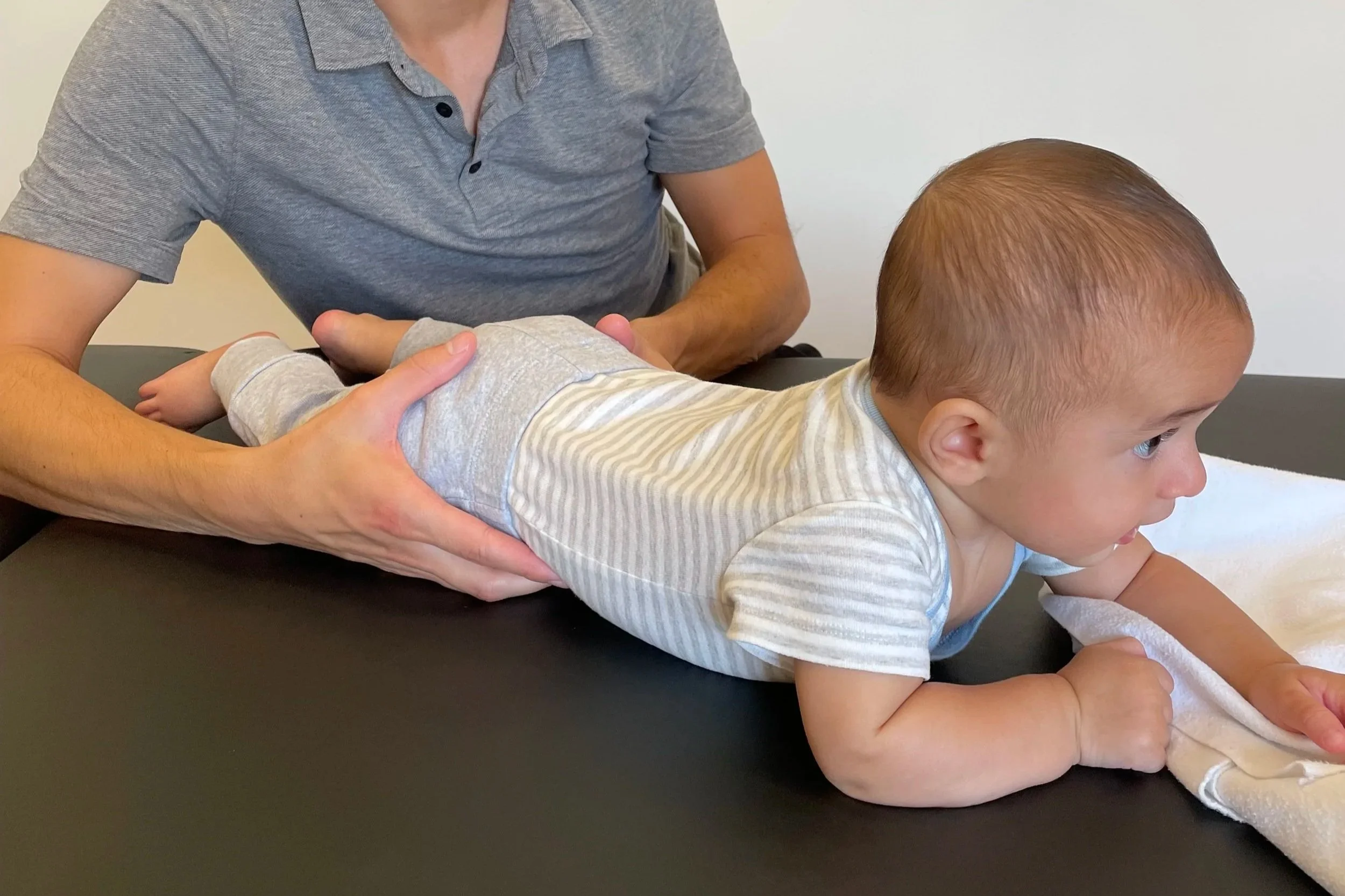
As more parents seek gentle, holistic support for their babies, terms like Craniosacral Fascial Therapy and the Gillespie Approach are becoming increasingly popular.
While these names may sound new or specialized, the principles behind them are deeply rooted in osteopathic philosophy and Fascia science — foundations that have long guided our clinical work.
In this article, we will explain what Craniosacral Fascial Therapy is, how it relates to training in osteopathy and Myofascial Release (MFR), and how this approach can support babies in their earliest stages of development.
What Is Craniosacral Fascial Therapy?
Craniosacral Fascial Therapy is a gentle, hands-on technique that focuses on the fascial system and its relationship to the craniosacral system — the membranes and fluid that surround and protect the brain and spinal cord.
Rather than forceful manipulation, this therapy uses subtle, sustained contact to:
● Release fascial tension
● Improve mobility in the cranial bones and sacrum
● Support nervous system regulation
● Encourage optimal structural development
For babies, this gentle approach is especially important.
Birth, whether vaginal or cesarean, places significant compressive forces on an infant’s head and body.
Even in uncomplicated deliveries, babies can develop fascial strain patterns that may influence feeding, sleep, digestion, or movement.
The Role of Myofascial Release
The John F. Barnes Myofascial Release Approach®️ (MFR) is a foundational component of this work. The most recognized contributor to modern myofascial techniques is John F. Barnes, who emphasized sustained, gentle pressure to allow fascia to release naturally.
John Barnes’ approach teaches that fascia is not simply a passive tissue — it is a dynamic, interconnected system that can hold strain patterns throughout the body. When tension is released in one area, it can positively influence distant structures.
This principle is especially relevant in babies.
For example:
● Tension at the base of the skull may influence latch and sucking coordination
● Fascial restriction through the diaphragm may affect reflux or digestion
● Pelvic compression during birth can influence head and neck positioning
Craniosacral Fascial Therapy overlaps significantly with these MFR principles.
Both approaches:
● Use sustained, gentle pressure
● Respect the body’s self-correcting mechanisms
● Focus on fascial continuity throughout the whole body
How This Connects to Osteopathy
As a Doctor of Osteopathy, hands-on work is always guided by these core principles:
● The body is interconnected
● Structure influences function
● The body has an innate capacity to heal when restrictions are removed
Osteopathy has long recognized the importance of cranial mobility, fascial continuity, and whole-body balance.
Craniosacral Fascial Therapy fits naturally within this framework.
Rather than separating “cranial work,” “fascial work,” and “structural work,” we see them as parts of one integrated system.
Why This Matters for Babies
The first year of life is a period of rapid neurological and structural development.
Subtle restrictions in the craniosacral or fascial system may influence:
● Nervous system regulation
● Motor development
● Comfort and self-soothing
● Breastfeeding mechanics
● Head and neck mobility
Gentle manual therapy supports optimal alignment and allows the baby’s body to function as efficiently as possible; which means happier babies!
Parents find comfort in the fact that treatment is extremely light and responsive to the baby’s cues.
Many babies relax deeply during treatments.
Is This Different From What We Already Do?
The principles behind Craniosacral Fascial Therapy closely mirror what we already integrate into Osteopathic and Myofascial treatments.
Rather than adopting a completely separate system, we combine:
● Osteopathic assessment
● Craniosacral techniques
● John F. Barnes Myofascial Release®️
● Whole-body evaluation
When Should Parents Consider Treatment?
Parents may consider an assessment if their baby:
● Has difficulty latching or feeding, including tongue-tie
● Shows a strong head preference or develops a flat spot (plagiocephaly)
● Seems uncomfortable on their back
● Cries excessively or struggles with regulation
● Experienced a long, fast, or assisted delivery
Early support can be helpful, but it’s never too late to address mobility and comfort.
A Gentle, Whole-Body Approach
Our approach is always individualized. No two babies are the same, and treatment is adapted to their needs and developmental stage.
By combining Osteopathic principles with Craniosacral and Myofascial Release techniques, we aim to create space for the body to self-correct — gently, safely, and effectively.
If you’re curious whether this type of treatment could benefit your baby, book a free consultation with Tahmina, DO(MP); she is happy to answer questions or discuss your concerns.